Yongkang Shuangyu Industry and Trade Co., Ltd

Trampoline

Your Leading Yongkang Shuangyu Industry and Trade Co., Ltd. Supplier

Yongkang Shuangyu Industry and Trade Co., Ltd. was established on November 15, 2012, its harmonious and harmonious working environment, positive learning atmosphere to absorb a lot of talented people to join, the company's main members of 3 people, registered in Yongkang market supervision Administration. At the same time of continuous development, to provide sufficient growth stage and development space for individuals. In the Internet era where opportunities and risks coexist, the company seeks development in competition, seeks opportunities in challenges, and strives to provide the most advanced products, the most advanced technology and perfect after-sales service.

Why Choose Us?

Rich experience

We have accumulated rich production experience and sales experience to ensure that you get high quality products.

24h online service

We will provide you with industry-leading pre-sale consultation and after-sales replacement and maintenance services, 7/24 hours online support.

Competitive price

We have the world's advanced production technology, perfect production line, efficient production process, smooth supply chain, can let you get the most perfect price.

Quick delivery

We have multiple raw material purchase channels, large production scale and stable supply chain, to provide a strong guarantee for rapid delivery.


  • Hidden Wild Hammock Stand

    Hidden Wild Hammock Stand

    Brand:vswing. Material:fabric. Style:rural. Can deny to do:Can. Frame:metal frame. With or without

    Add to Inquiry
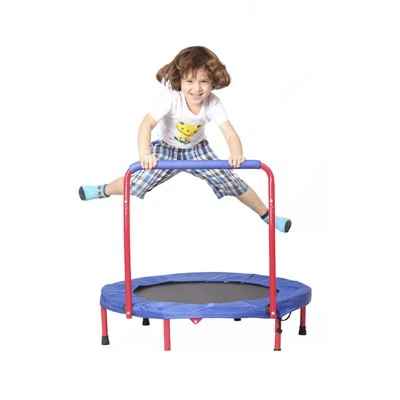
  • Large Air Trampoline

    Large Air Trampoline

    Brand:vswing. Material:ABS. For people:universal. Model:36inch. Place of origin:Yongkang

    Add to Inquiry
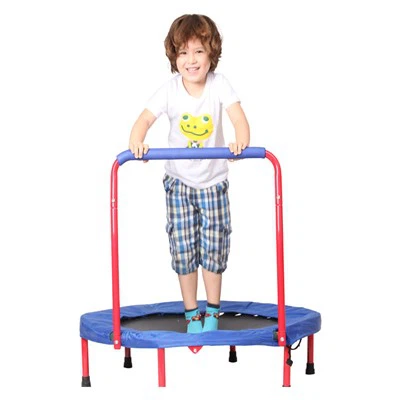
  • Small Indoor Jump Park

    Small Indoor Jump Park

    Brand:vswing. Material:ABS. For people:universal. Model:36inch. Place of origin:Yongkang. Custom

    Add to Inquiry
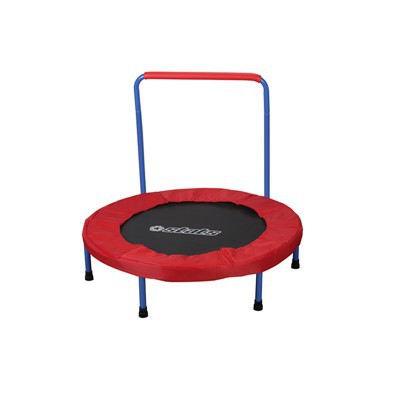
  • Safe Junior Trampoline

    Safe Junior Trampoline

    Brand:vswing. Material:ABS. For people:universal. Model:36inch. Place of origin:Yongkang. Custom

    Add to Inquiry


What Is Trampoline?

A trampoline is a device consisting of a piece of taut, strong fabric stretched between a steel frame often using many coiled springs. People bounce on trampolines for recreational and competitive purposes.

The fabric that users bounce on is not elastic itself; the elasticity is provided by the springs that connect it to the frame, which store potential energy.

Large Air Trampoline
Benefits of Trampoline
 

Increased strength

Jumping on the trampoline engages several muscle groups. As you use your body’s momentum to move on the trampoline, you stimulate the muscles in your glutes, legs, back, and abdomen to help you jump. Over time, this can increase strength.


Improved cardiovascular health

Jumping up and down repeatedly works your heart, pumps blood throughout your body, and improves aerobic capabilities. This is especially helpful for athletes participating in distance swimming and marathons.


Enhanced balance

If you’re beginning to jump on the trampoline, you’re more likely to move around its surface as you land on it. Different points on the trampoline yield differently when you press on them, so you’ll have to balance yourself accordingly to get enough thrust on your next jump. Consistently doing this improves your balance and strengthens your core muscles.


Low impact

There’s increasing awareness about the impact of exercise on your body. For example, when you run on hard surfaces, you put a lot of stress on specific joints such as your knees and ankles, which, over time, can lead to chronic injuries. Trampolining is a low-impact exercise that works several joints without placing undue stress on them, thus reducing the likelihood of chronic injuries.


Calorie loss

Research suggests rebounding can be three times more effective at burning calories when compared to other exercises, like running.


Reduced stress

Exercise releases endorphins that reduce stress. When you’re rebounding, you alternately tense and relax your muscles, which improves circulation and has a distinct impact on your body. Once you finish rebounding, the muscles relax, bringing a feeling of relaxation that can help relieve stress.

Types of Trampoline
 
1

Round Trampolines
Round trampolines are thought of as recreational trampolines that are suitable for outdoor use. They are ideal for small or occasional recreational activities. It is the most commonly used kind of trampoline that is with a variety of sizes, designs and, of course, high-quality. It can be sized to 18 feet and are available in an extremely wide price range according to the quality.

 
2

Rectangular Trampolines
Rectangular Trampolines are designed for gymnasts who are semi-professionals or professional and if you don’t have enough space due to their rectangular shape, they may not be the right choice for you. The bounce they provide differs than the round one, since it doesn’t lead you to the center of the trampoline, you are the only one to decide which direction to take, which could be difficult for novice jumpers. However, it is ideal for those who require to leap as to the highest possible height, as this trampoline type will provide you with a with a much greater bounce.

 
3

Square Trampolines
Square Trampolines are mixing two of the most popular features: they’re big and are secure. They’re higher in cost, but you’ll be awed by every minute of your time using these.

 
4

Springless Trampolines
They are an old and was developed by the engineer from New Zealand Dr. Keith Alexander.
He found that a significant number of children had been hospitalized or treated with injuries sustained from trampolines and made the decision to stop the practice. He developed an innovative method to place springs and beneath the mat. The answer is that it doesn’t utilize normal steel springs, but rather long composite rods, which eliminates the chance of landing on them.

 
5

Mini Trampolines
If you’re in an apartment or are severely constrained by space the idea of a small trampoline might be exactly what you’re looking to get in your exercise session.
Mini trampolines are an ideal alternative to gymnasiums during cold winter nights. They’re small enough to make them invisible from the inside and could be the perfect thing to provide “a bit of personal touch” to your living area.

 
Components of Trampoline
Safe Junior Trampoline
 

Raw materials
Trampolines are made of four basic components: the tubing, springs, jumping mat, and safety pads.

The tubing, used to make the frame and legs of the trampoline, is usually made of galvanized steel and is bought at a certain length and width from a supplier. Using galvanized steel protects the frame from rust and environmental conditions as many home trampolines are for outside use.

The springs, which give the trampoline its bounce, are commonly made to the specifications of the trampoline company by another supplier. Usually, the company making the springs specializes in spring manufacture.

The jumping mats are made of woven fibers. Today, mats are made of artificial fibers like polyethylene or nylon. The heavily woven fabric is WV-protected to prevent fading when used out of doors.

Safety pads go over the springs and frame and are made of foam. They have vinyl covers and pie straps to connect the pads to the frame. The manufacture of the foam core of the safety pads is also outsourced and made to manufacturer specifications.

productcate-1-1
 

Process of Trampolines
When the tubing arrives at the trampoline factory, it is bent into an arc on the bending jig. Holes are punched into the sides for the springs.
Sockets are welded so that the U-shaped legs can fit into the frame. The tubing often comes in four pieces. When connected, all four create a circular design. One end of each arc is swaged—squeezed down—so that the pieces can be put together.
Once delivered to the factory, the fabric for the jumping mat is cut to size. Using industrial sewing machines, the fabric is edged, and reinforced web strapping is sewn on. D-rings are also sewed into the fabric to hold the mat to the frame.
Around the foam core of the safety pads, a vinyl cover and pie straps are sewn to increase durability.
The springs do not require any additional manufacturing processes at the factory. They are packaged, along with the other parts, for final shipment.


How to Maintain Trampolines


Trampoline Care in Spring
The Spring care may vary depending on how you left the trampoline in the Winter. Nevertheless, all parts should be inspected. Here is the checklist for the Spring Trampoline check:

  • Always start with the frame

Is there a need to move the trampoline to a better place in your backyard? It is always easier to move the frame rather than the whole trampoline with enclosure and other accessories attached, although that can be done safely as well. Note that moving the frame (or the whole trampoline) requires two people.

Inspect the joints and bolts for tightness. Are there any signs of rust or deterioration in the welds? Although unlikely, if the trampoline frame presents any noticeable issues, such as bent, broken or missing parts, contact customer care for further advice.

  • Continue with attaching the springs between the frame and the mat

Utilize the spring pull tool to make the assembly quick and easy. Look for any missing parts and replace the damaged, loosen or rusted springs with new ones.

This step is extremely important in case you forgot to check all springs while disassembling the trampoline or you left the it as it is for the Winter.

  • Evaluate the condition of the trampoline mat

Evaluating the condition of the mat is easier once assembled. Does it have any punctures, holes, rips, tears or loose stitching? Can it be fixed with the repair kit or is a new mat a better option? Check the mat for any sagging that may occur in case heavy objects or snow was left on top of it during the Winter.

  • Inspect the condition of the safety pad

If reassembling, place the pad first over the springs and frame. The condition of the pad is quick to evaluate as any holes or rips would be visible on it but pay extra attention to the bungees for fastening the safety pad as these get strained over time.

  • Look for rips and holes on the enclosure net

Additionally, pay extra attention on the secure and correct attachment of the enclosure net and the poles.

  • Check the condition of any trampoline accessories you may have

These include, but are not limited to ladders, skirts, tents, scooters.


Trampoline Care in Summer
Summer is the season of holidays, trampoline tricks and barbecue parties. The most usage usually occurs during Summer, so general checkups here and there are recommended depending on how well the Spring Check was done.

Depending on your location as well as the placement of the trampoline, consider following things:

  • Cleaning up the trampoline from any items not belonging to it

Debris, tree branches or other sharp items might cause safety risks and rips or holes on the mat.

  • Heat control by changing the placement of the trampoline on the backyard

Our trampolines may stand the heat, but the little thrill seekers might not.

  • Severe windy weather conditions

In severe wind, any trampolines can be blown away. The trampoline should be installed with ACON anchor set, However, if you live in an area where severe wind or hurricanes are to occur, either disassemble or secure the trampoline to the ground with ropes and stakes as tightly and securely as possible.

  • The placement of the safety pad

Make sure to do occasional checks regarding the secure and proper attachment of the safety pad to the frame.

If you notice something is wrong, you should abstain from using the trampoline once the issue has been fixed.

How do Trampolines Get Their Bounce?


Newton’s Basic Laws of Motion

Newton’s three laws of motion are central to the way a trampoline works:

Newton’s first law

The law of inertia. An object at rest will stay at rest, or an object in motion will stay in motion, unless acted upon by an external force. This is why you don’t get propelled upward if you simply stand on a trampoline—you have to move your legs (the external force). It’s also why you don’t keep flying upwards into outer space after the first jump—the external force of gravity brings you back down.
Newton’s second law

Acceleration. The acceleration of an object depends on its mass and the net force acting upon it. Basically, this means it requires more force to move a heavier, larger object (adults have to use more energy to bounce on a trampoline than children do).
Newton’s third law

“For every action, there is an equal and opposite reaction.” This is where you get the bounce! When you push down on the trampoline (or fall downward onto the trampoline bed), Newton’s third law says that an equal and opposite reaction pushes back.

Hooke’s Law and your springs

A trampoline is made up of a round piece of fabric (the trampoline “bed”) and springs that suspend the fabric from a rigid frame. Of these basic components, the springs are what make the magic happen. And it’s all because of Hooke’s Law which states that the force needed to extend a spring is proportional to the length of extension. The heavier the person on the trampoline, the longer the springs extend.

Trampolines get their bounce in the way that Hooke’s law interacts with Newton’s third law of motion. When you exert force on the springs, causing them to extend, then you have an “equal and opposite reaction” coming from the springs themselves. The springs push back with the same force that you exerted, and you’re sent flying into the air.

Small Indoor Jump Park
Our Factory
 

The company is located at No.111 East Changsheng Road, Xiangzhu First Village, Xiangzhu Town, Yongkang City, Jinhua City, Zhejiang Province. Main business of sports supplies, needles textiles, daily rubber products, pumps and accessories, engineering machinery and accessories, auto parts, motorcycle accessories, office appliance, kitchen utensils, hardware tools, toys, pet appliance, daily plastic products, daily hardware products, MuZhu products manufacturing, processing and sales, sales of commodities, goods and technology import and export business, etc.

1


FAQ


Q: What is trampolining explained?

A: Trampolining or trampoline gymnastics is a competitive Olympic sport in which athletes perform acrobatics while bouncing on a trampoline. In competition, these can include simple jumps in the straight, pike, tuck, or straddle position to more complex combinations of forward and/or backward somersaults and twists.

Q: Why is it called trampoline?

A: Nissen explained that the name came from the Spanish trampolín, meaning a diving board. Nissen had heard the word on a demonstration tour in Mexico in the late 1930s and decided to use an anglicized form as the trademark for the apparatus.

Q: Why is trampoline so good?

A: Trampolining is a low-impact exercise that works several joints without placing undue stress on them, thus reducing the likelihood of chronic injuries. Calorie loss. Research suggests rebounding can be three times more effective at burning calories when compared to other exercises, like running. Reduced stress.

Q: What were trampolines originally called?

A: It was in Mexico that George got the idea to name his new contraption “trampoline”. The Spanish term for a diving board is el tramplin. Nissen simply added the “e”, thus coming up for the name of his invention.

Q: Is jumping on a trampoline bad for you?

A: In fact, there is tons of research that shows that trampolines can actually be a better alternative for a workout than running or hitting the gym! For kids and adults alike, trampoline jumping can serve a dual role as a fun outdoor activity and an effective platform to improve your overall health.

Q: Why is jumping on a trampoline so fun?

A: Bouncing up and down on the spring-pulled jumping mat releases endorphins, increases energy and induces lots of smiles. Not only are trampolines fun, but they can help encourage kids to be healthier in many aspects of their lives. It promotes joy and active habits in a safe and fun way.

Q: Are trampolines healthy?

A: Though there are few large, high-quality studies on trampolining, the studies that exist suggest it improves balance, cardiovascular fitness and pelvic floor musculature, all while being gentler on the joints than higher-impact forms of exercise.

Q: What is safer than a trampoline?

A: Inflatable bounce houses are a safer alternative to trampolines. Bounce houses are enclosed with inflatable material, making them easy to bounce off safely. On the other hand, trampolines without nets don't have an enclosure, which can cause jumpers to fall off.

Q: Why kids should get a trampoline?

A: A trampoline keeps kids jumping around, working their muscles and cardiovascular systems. It's a great way of enhancing children's muscle development, strengthening bones and reinforcing joints.

Q: What is a trampoline athlete called?

A: Trampoline is a breathtaking sport that can see athletes bounce over 8 metres in the air while performing a series of complex twists and somersaults. As it is a highly technical sport, trampolinists are required to have an exceptional sense of balance and absolute precision.

Q: Did a kid invent the trampoline?

A: Nissen invented the trampoline in the 1930s, when, as a teenage gymnast, he and his coach created a piece of equipment out of scrap steel and tire inner tubes for his act in the Iowa Hawkeye Circus.

Q: How old is the oldest trampoline?

A: The first modern trampolines were built by a couple of University of Iowa gymnasts in 1936. Since then, they've been used by the US Navy Flight School to train pilots and navigators in spatial orientation, by NASA for astronaut training, and for competitive and recreational purposes.

Q: Who should not jump on a trampoline?

A: Don't allow them on a trampoline if they're a baby, toddler or child under six because they're not physically developed to control their bouncing. always use a safety net to prevent falls off the trampoline. supervise your child and make sure they take a rest from trampolining.

Q: What is 10 minutes on a trampoline equivalent to?

A: 30 minute run
It may be fun, but this workout can burn a serious amount of calories. Due to its low impact nature, a 10 minute trampoline session can burn the same amount of fat as a 30 minute run. That's up to 1,000 calories an hour.

Q: What happens if you jump on a trampoline everyday?

A: Improves Blood Flow
Jumping on a trampoline is classified as a cardiovascular or aerobic exercise. This means that it increases your heart rate, pumping your blood through your body faster. This increase in blood flow affects every part of your body positively. For the same reasons, it also improves your heart health.

Q: Why can't you jump after being on a trampoline?

A: After repeated jumps over an elastic surface (e.g. a trampoline), subjects usually report a strange sensation when they jump again overground (e.g. they feel unable to jump because their body feels heavy). However, the motor and sensory effects of exposure to an elastic surface are unknown.

Q: At what age are trampolines safe?

A: According to the American Academy of Pediatrics, no child under the age of six years old should be jumping on a backyard trampoline. This is also spelled out by the American Society of Testing and Materials' (ASTM) trampoline standards.

Q: How long should you keep a trampoline?

A: For a large, outdoor trampoline, the general average lifespan is generally between 3 – 8 years. Depending on the manufacturer, the average lifespan for the mat is 1-5 years, for frame 3-8 years and for springs 3-4 years.

Q: What can ruin a trampoline?

A: Damaged springs
When bouncing, springs stretch and close, so they can quickly wear out, lose their elasticity, or break. If springs are exposed to water, they often rust. Rusty springs lower your trampoline's bounce and cause those annoying sounds you hear when jumping.

Q: What can I get my child instead of a trampoline?

A: Inflatable Pool Toys
They give kiddos a bouncy surface without being too tall, making them safer than traditional trampolines. Keep an eye out for holes in the vinyl, but inflatable toys are lightweight and can offer a safe alternative to bounce.

We're known as one of the most professional trampoline manufacturers and suppliers in China. If you're going to wholesale high quality trampoline for sale, welcome to get more information from our factory.

Safe Junior Trampoline, Small Indoor Jump Park, Trampoline
goTop

(0/10)

clearall